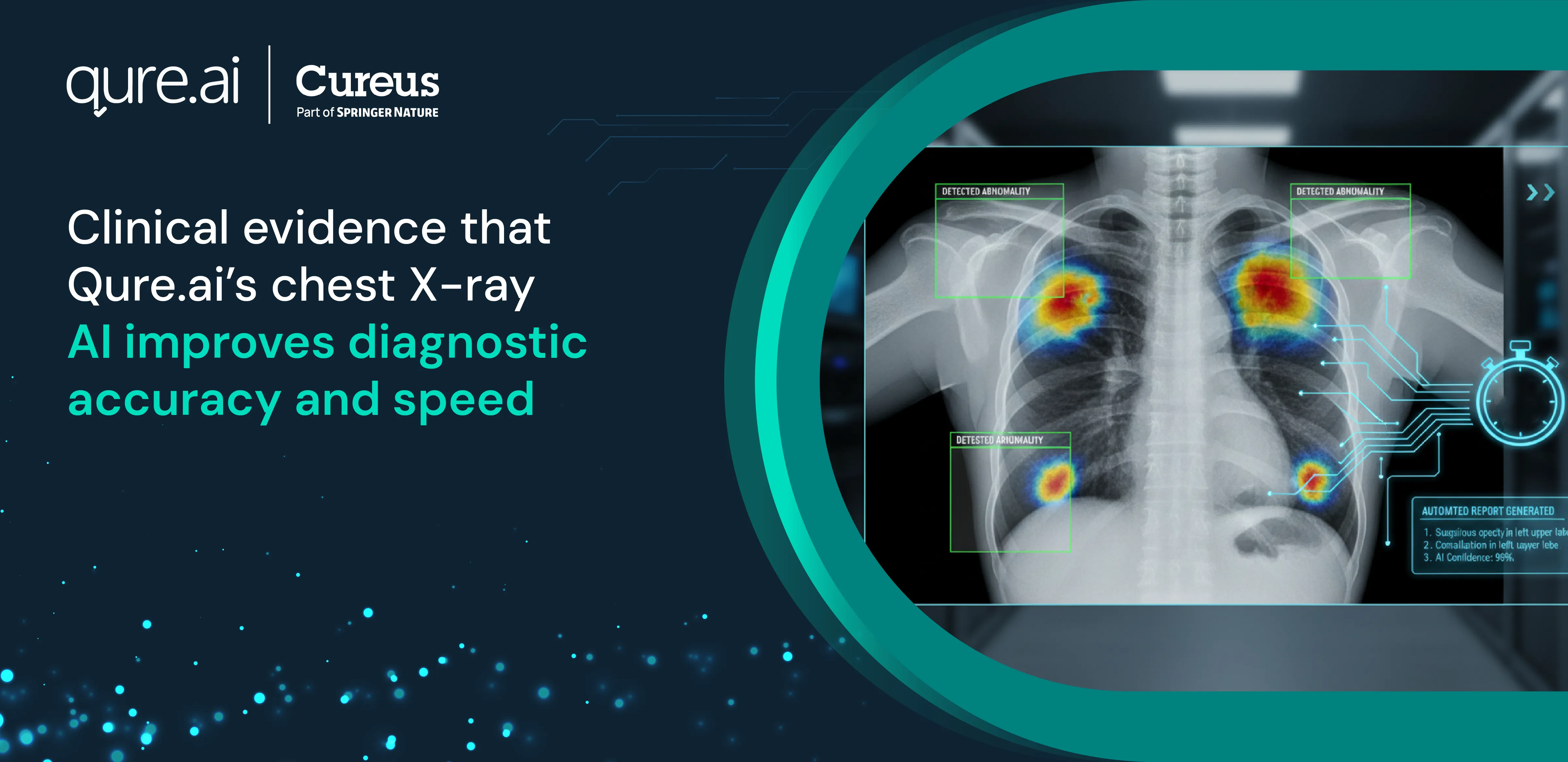
This study explores the impact of Qure.AI’s AI-driven chest X-ray interpretation tool, "qXR," in improving healthcare diagnostics, particularly in detecting lung nodules, heart failure, and tuberculosis (TB). The methodology involved a review of clinical trials from sources like PubMed, Google Scholar, and ClinicalKey, focusing on AI’s diagnostic accuracy and efficiency. Clinical studies across various countries demonstrated qXR’s effectiveness, with sensitivity and specificity reaching 95%-100% in TB and lung nodule detection and accuracy of 84% in heart failure diagnosis. AI-assisted diagnostics reduced turnaround time by 40.63% and helped radiologists focus on abnormal cases with 98.9% negative predictive value. The findings emphasize AI’s role as a complementary tool to physicians, enhancing efficiency, accuracy, and early disease detection. As AI technology continues evolving, Qure.AI’s solutions demonstrate strong potential in transforming healthcare delivery globally through faster diagnostics, cost reductions, and improved patient outcomes.
Published 03 Jun 2024
Revolutionizing Healthcare: Qure.AI's Innovations in Medical Diagnosis and Treatment
Author: Esteban Zavaleta-Monestel,
Ricardo Quesada-Villaseñor,
Sebastián Arguedas-Chacón,
Jonathan García-Montero,
Monserrat Barrantes-López,
Juliana Salas-Segura,
Adriana Anchía-Alfaro,
Daniel Nieto-Bernal,
Daniel E. Diaz-Juan