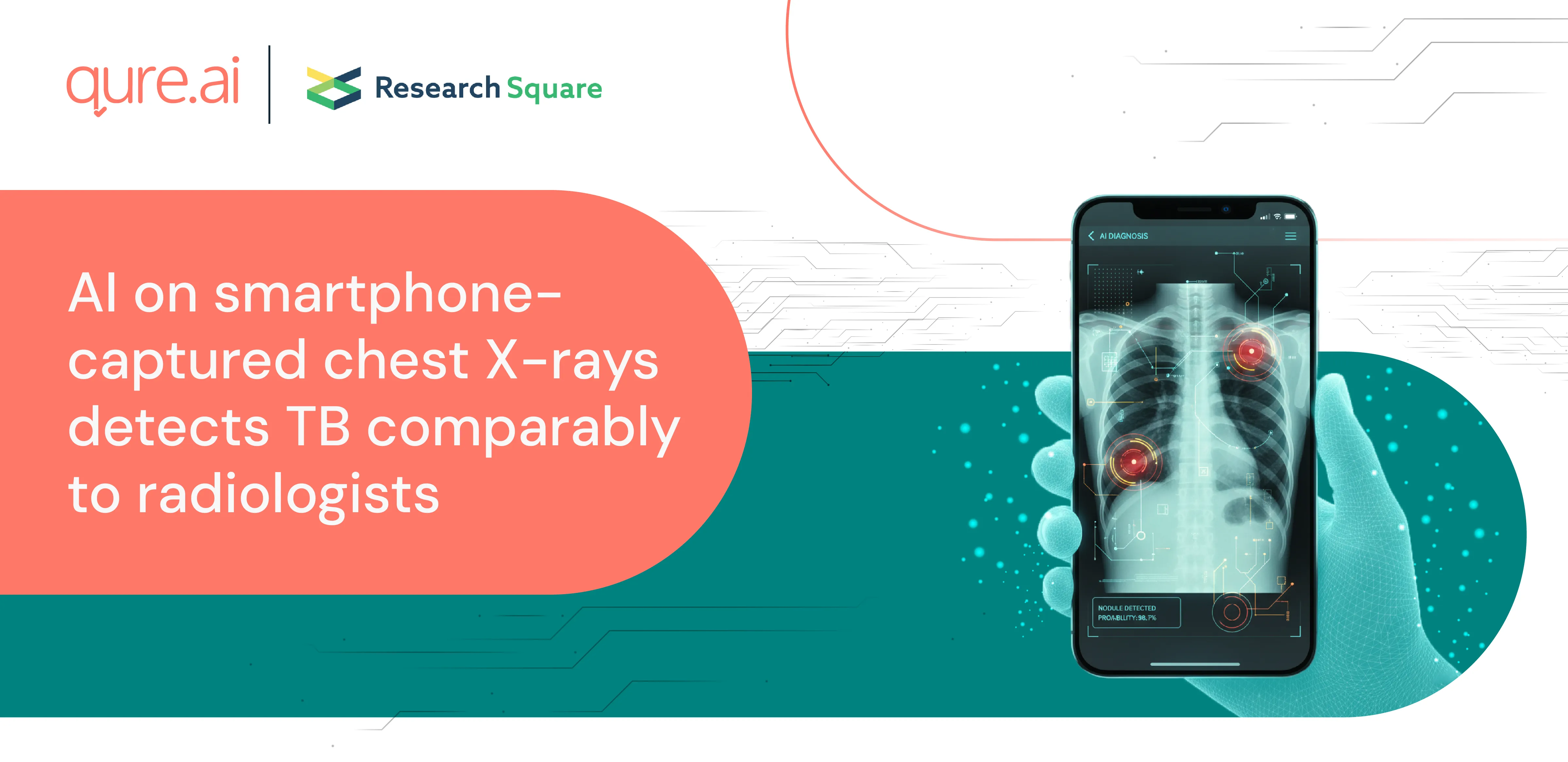
This retrospective pilot study compares the performance of AI-powered computer-aided detection (CAD) software (qXR by Qure.ai) with that of two experienced Ethiopian radiologists in diagnosing pulmonary tuberculosis (PTB) using chest X-rays (CXR) from Guinea-Bissau and Ethiopia. The study focused on enhancing TB diagnosis in low-resource, high TB-endemic settings by evaluating the feasibility of using mobile phone-captured analogue CXRs. Two reference standards were used: clinical diagnosis and GeneXpert (GX)-confirmed TB. Out of 498 CXRs, the software identified 81 cases, while the radiologists detected 50 and 99 cases, respectively. The CAD tool achieved an area under the curve (AUC) of 0.84 for GX-confirmed cases, with a sensitivity of 76.5% and specificity of 85.9% at a 0.5 cut-off. Radiologist A showed 64.7% sensitivity and 91.9% specificity, while Radiologist B had 76.5% sensitivity and 82.3% specificity. The agreement between the radiologists was moderate (k=0.45), as was the agreement between the software and individual radiologists (k=0.56). The findings suggest that CAD CXR performs comparably to experienced radiologists, even when applied to mobile phone images of analogue CXRs, making it a promising tool for TB diagnosis in resource-limited settings.
Published 24 Dec 2024
Mobile phone-based computer-aided chest X-ray detects TB as well as trained radiologists
Author: Zerubabel Desita,
Temesgen Tadesse,
Anders Solitander Bohlbro,
Armando Sifna,
Hikma Fekadu,
Segenet Bizuneh,
Sruti Sridhar,
Dennis Robert,
Manij Tadepalli,
Christian Wejse,
Thomas Schön,
Frauke Rudolf